
DDP SIDP: Inclusive Governance dialogue series
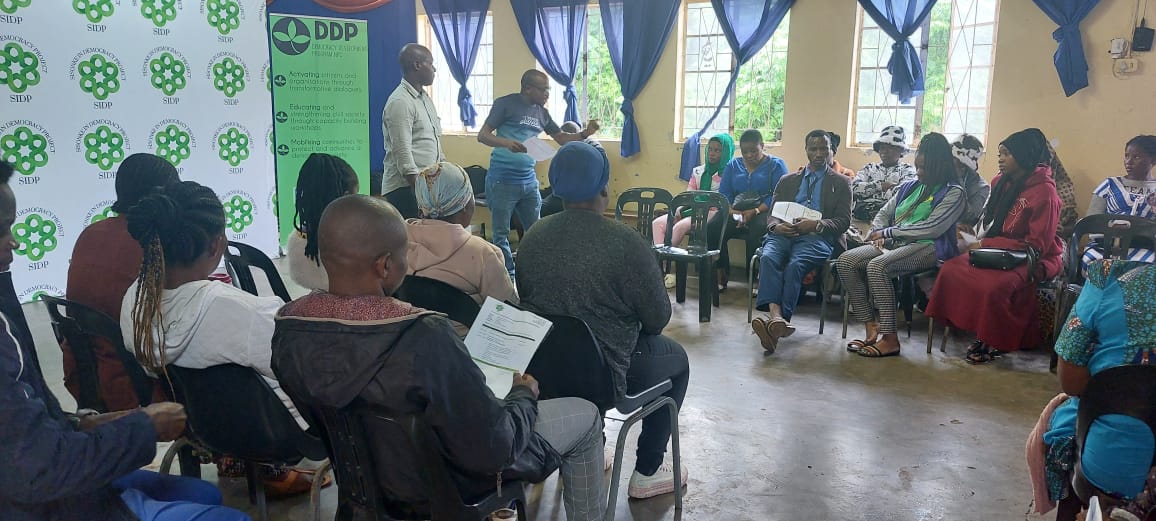
Democracy Development Program facilitates community dialogues to promote the inclusion of African migrants into local governance in three sites in Greater Durban – KwaMashu, KwaMakhutha and Isipingo. Community Dialogues form part of the activities the project is implementing to achieve its objectives through the theme “Promoting inclusion, solidarity and representation in local governance structures.
The objectives of the project were set to achieve immediate results, one of them is, for the project beneficiaries to gain a better understanding of their collective responsibilities of promoting social cohesion and the mechanisms that they could explore in sustaining inclusive governance.
Community Dialogues that took place in three sites were accompanied by rain, which did not deter the community eagerness to be discuss issues of inclusion, representation and solidarity. Attendance in three sites was beyond the expectation, Isipingo witnessed an influx on non-locals which was perceived as a good sign towards achieve the project’s long-term goals.
Series of dialogues focused on mechanisms that could bed explore in sustaining inclusive governance; discussed ways of promoting social cohesion to gain a better understanding of their collective responsibilities.
Local structures identified by the participants, includes Community Policing Forums, School Governing Bodies, Business Committees, Neighbourhood Watch, Ward Committees, War Rooms and Peace Building Committee’s among the other.
Some of the key insights and recommendations drawn from vigorous discussions:
- Dialogues highlighted the need for migrants to have equal access to public services, social networks, and jobs, and to contribute with their skills to local development.
- Constructive and inclusive conversation on the challenges and opportunities of inclusive governance demands continuous engagement.
- The importance and urgency to create an inclusive society by promoting the values, relations, and institutions that enable all people to participate in social, economic, cultural, and political life.
- Contribution towards changing the narrative on migration by highlighting the positive impacts of migration on local development, social cohesion, and cultural diversity is crucial.
- Local actors were empowered to play active role in shaping the narrative on migration agenda in local governance.
- Perspective: Non-locals and locals got to know and understand each other better through informal conversations, group discussions and open engagement.
- Assurance: Non-locals through discussions were assured by locals that they are protected by the Constitution and that there are structures available for their frustrations and concerns where social issues are concerned.
- Acceptance: Locals started to warm up to the idea of having non-locals represented in local structures especially war room, school governing body and community policing forum.
- Communities were encouraged to promote social and cultural activities that encourage interaction between migrants and host communities to advance in the integration process.
- Consult relevant stakeholders before making decisions that affect non-locals. Governments in a local level and through its local structures are expected to govern and make decisions after consulting relevant stakeholders.
